When the World Turned Its Back: James Nachtwey’s Reflections on the Rwandan Genocide

In the linked article:

In 1994 TIME photographer James Nachtwey witnessed the devastating effects of the Rwandan genocide. On the 17-year anniversary, the photographer looks back on the tragedy.

Humans make war, and we make peace. We make love, and we make hatred – hatred and fear. Those two are the killers. Orchestrate hatred and fear, and humans make genocide. European colonialists used fear and hatred to cut an incision deep into Rwanda to divide and conquer. It was never allowed to heal and became the subtext for society long after the white rulers made their exit. In 1994, tribal enmity between Hutus and Tutsis was politically manipulated to a state of critical mass. Between 500,000 and 1 million people were slaughtered in the span of three months using farm implements as weapons. The killing by the Hutu interahamwe was committed face-to-face, neighbor-against-neighbor, and sometimes even brother-against-brother.

The number most often heard is 800,000. It’s a big number no matter what it’s applied to. Trying to imagine 800,000 people with their heads bashed in by rocks and clubs, impaled on spears, hacked to death with hoes and machetes – in just three months – stuns the mind, and we struggle to wring meaning out of words like “biblical” or “apocalyptic.”

As they had in Bosnia, instead of sending more troops to prevent bloodshed, the United Nations Peacekeeping Force stepped aside. Because of the disastrous military operation in Somalia, our own political leaders made a conscious decision not to use the one word that could even begin to have meaning -“genocide” – understanding the obligation to intervene implicit in the language. As the world turned its back, the genocide happened in front of its eyes. Later, public apologies were made, something rare for politicians, but the gesture did not bring back the life of a single Rwandan.

Later, when the Hutu army and militias fled into Zaire (now the Democratic Republic of the Congo) to escape the advancing Tutsi forces, more than 1 million people crossed the frontier in a single day. They set up makeshift shelters on rocky, volcanic earth, where it was impossible to find clean water, dig latrines or bury the dead. Within days a cholera epidemic swept through the camps. Tens of thousands died within a few weeks. Mass burials were carried out using bulldozers. Untold numbers of children were orphaned and abandoned. International relief agencies streamed into Goma to try to stem the tide of disease.

Those responsible for the genocide concealed themselves within the mass of civilians inside the camps. Relief organizations were in a dilemma. Because they could not distinguish who was a killer from who was a human shield, they were obliged to treat everyone. Ironically, the international community that had walked away from its responsibilities during the genocide was now forced to come to the rescue of those who had committed the atrocities.

All this happened in the same time frame in which Nelson Mandela became president of South Africa, as if by some infernal metaphysics the best humanity had to offer would be offset by the worst imaginable. It was our world then, and it’s our world now. We have examples from both ends of the spectrum of human aspirations. Will we take heed from the lessons taught by our own history? If we don’t, who will?

James Nachtwey is a TIME contract photographer, documenting wars, conflicts and critical social issues. On his most recent assignment, Nachtwey was one of the first photographers on the ground in northern Japan covering the devastating effects of the March 11 earthquake and tsunami. Nachtwey was also embedded with a United Stated Medevac unit in southern Afghanistan, published in January 2011.

Posted in Africa, FSEM: History of Genocide | Leave a comment

Al-Tikriti Participates in NGO Debate, Speaks at Stafford Rotary Club

Al-Tikriti Participates in NGO Debate, Speaks at Stafford Rotary Club

In his capacity as a board member of the United States section of  MSF/Doctors Without Borders, Nabil Al-Tikriti, associate professor of history and American studies, participated in the annual Field Associative Debate (FAD) for MSF staff serving throughout Afghanistan, in Kabul on March 10 - 11.

This year’s international FAD topic covered the use of new [...]

The post Al-Tikriti Participates in NGO Debate, Speaks at Stafford Rotary Club appeared first on EagleEye.

Posted in naltikri, Professional Notes | Comments Off on Al-Tikriti Participates in NGO Debate, Speaks at Stafford Rotary Club

Al-Tikriti Participates in NGO Debate, Speaks at Stafford Rotary Club

Al-Tikriti Participates in NGO Debate, Speaks at Stafford Rotary Club
Nabil Al-Tikriti discussing an FAD topic.

Nabil Al-Tikriti discussing an FAD topic.

In his capacity as a board member of the United States section of  MSF/Doctors Without Borders, Nabil Al-Tikriti, associate professor of history and American studies, participated in the annual Field Associative Debate (FAD) for MSF staff serving throughout Afghanistan, in Kabul on March 10 – 11.

This year’s international FAD topic covered the use of new communications and data collection technologies for field-based medical relief, while the national FAD topic asked where MSF might usefully choose to expand its operations in Afghanistan in the months and years to come. For the latter debate, participants were exposed to three UN maps detailing conflict, needs, and NGO presence in Afghanistan, and were then asked to debate potential regional and operational areas of need. After debating this year’s topics, staff members then presented recommendations and motions for consideration by the MSF International General Assembly. Immediately prior to this year’s FAD, Prof. Al-Tikriti joined several colleagues on a brief field visit to both a mobile clinic and Ahmad Shah Baba hospital in the outskirts of Kabul, a full service maternity, child health, and trauma hospital supplied, supported, and staffed with the assistance of MSF. Upon his return, he co-authored a FAD report, and completed a brief memo on regional operations for internal review.

Shortly after his return, Al-Tikriti made a presentation to the Stafford Rotary Club on March 19 describing his past experiences since 1993 volunteering in field operations with MSF, and his current activities as an MSF USA board member. In the course of this presentation, he discussed his experiences in several international conflicts, MSF’s charter and approach to medical relief, the movement’s global financial challenges, and his recent trip to Kabul.

Posted in naltikri@umw.edu, Professional Notes | Comments Off on Al-Tikriti Participates in NGO Debate, Speaks at Stafford Rotary Club

MERIP’s Primer on Palestine

This is the latest version of the Middle East Report’s “Primer on Palestine,” a comprehensive guide to the Arab-Israeli Conflict:

Primer on Palestine, Israel and the Arab-Israeli Conflict

Contents

  1. The Land and the People
  2. The United Nations Partition Plan
  3. The Palestinian Refugees
  4. Palestinians
  5. Palestinian Citizens of Israel
  6. The June 1967 War
  7. UN Security Council Resolution 242
  8. The Occupied Territories
  9. Jerusalem
  10. The Palestine Liberation Organization
  11. The October 1973 War and the Role of Egypt
  1. The First Intifada
  2. The Negotiation Process
  3. The Oslo Accords
  4. The Second (al-Aqsa) Intifada
  5. The 2002 Arab Peace Plan
  6. The Separation Barrier
  7. Popular Resistance
  8. The Road Map and the Quartet
  9. Israel’s “Withdrawal” from the Gaza Strip
  10. The 2006 Palestinian Elections and the Rise of Hamas
  11. Israel’s Siege of the Gaza Strip
  12. The Secret Olmert-Abbas Negotiations
  13. Palestinian Statehood and the UN
Palestine, Israel and the Arab Israeli Conflict: A Primer

Click to view or download a PDF of the Primer.

The conflict between Palestinian Arabs and Zionist (now Israeli) Jews is a modern phenomenon, dating to the end of the nineteenth century. Although the two groups have different religions (Palestinians include Muslims, Christians and Druze), religious differences are not the cause of the strife. The conflict began as a struggle over land. From the end of World War I until 1948, the area that both groups claimed was known internationally as Palestine. That same name was also used to designate a less well-defined “Holy Land” by the three monotheistic religions. Following the war of 1948–1949, this land was divided into three parts: the State of Israel, the West Bank (of the Jordan River) and the Gaza Strip…

For the rest of the Primer, read here…

Posted in history | Leave a comment

Yarmouk Camp Op-Ed, Right of Return

Lessons from Yarmouk

Yousef Munayyer
Yousef Munayyer is Executive Director of The Jerusalem Fund and its educational programme, The Palestine Center. Prior to joining the Palestine Center, he served as a Policy Analyst for the American-Arab Anti-Discrimination Committee (ADC), the nation’s largest Arab American membership organisation.

Yarmouk is the latest reminder of the international community’ failure to address the plight of Palestinian refugees, writes Munayyer [EPA]
In Yarmouk refugee camp, the largest concentration of Palestinians in Syria among the nine refugee camps there, the Palestinian population is trapped and suffering. The camp sits just south of Damascus and its strategic location has made it part of the battlefield, leaving refugees who would rather take a neutral stance for their own safety caught in the middle.

Prior to 2011, the camp was home to some 180, 000 Palestinian refugees, today only about 20,000 remain. Most of its inhabitants have been forced into becoming refugees again. Those stuck inside are trapped, and a stalemate between the government and rebels has led to a siege preventing humanitarian access for months. Only recently have emergency food packages been permitted entry.read further here…

Posted in Current Events | Leave a comment

Op-Ed on Yarmouk Camp & Right of Return

Lessons from Yarmouk

Every decade, another episode of dispossession and loss plays out for Palestinian refugees in troubled host countries.

Last updated: 27 Feb 2014 10:01
Yousef Munayyer
Yousef Munayyer is Executive Director of The Jerusalem Fund and its educational programme, The Palestine Center. Prior to joining the Palestine Center, he served as a Policy Analyst for the American-Arab Anti-Discrimination Committee (ADC), the nation’s largest Arab American membership organisation.

Yarmouk is the latest reminder of the international community’ failure to address the plight of Palestinian refugees, writes Munayyer [EPA]
In Yarmouk refugee camp, the largest concentration of Palestinians in Syria among the nine refugee camps there, the Palestinian population is trapped and suffering. The camp sits just south of Damascus and its strategic location has made it part of the battlefield, leaving refugees who would rather take a neutral stance for their own safety caught in the middle.

Prior to 2011, the camp was home to some 180, 000 Palestinian refugees, today only about 20,000 remain. Most of its inhabitants have been forced into becoming refugees again. Those stuck inside are trapped, and a stalemate between the government and rebels has led to a siege preventing humanitarian access for months. Only recently have emergency food packages been permitted entry….

Read further here…


Posted in Current Events | Leave a comment

Islamic Civilization II » naltikri 2014-03-03 03:43:47

Zoologic Darwinism and the Origins of World War One:

A posting form “The Afternoon Map” blog on cartography and history:

Thursday, February 27, 2014

Zoologic Darwinism and the Origins of World War One

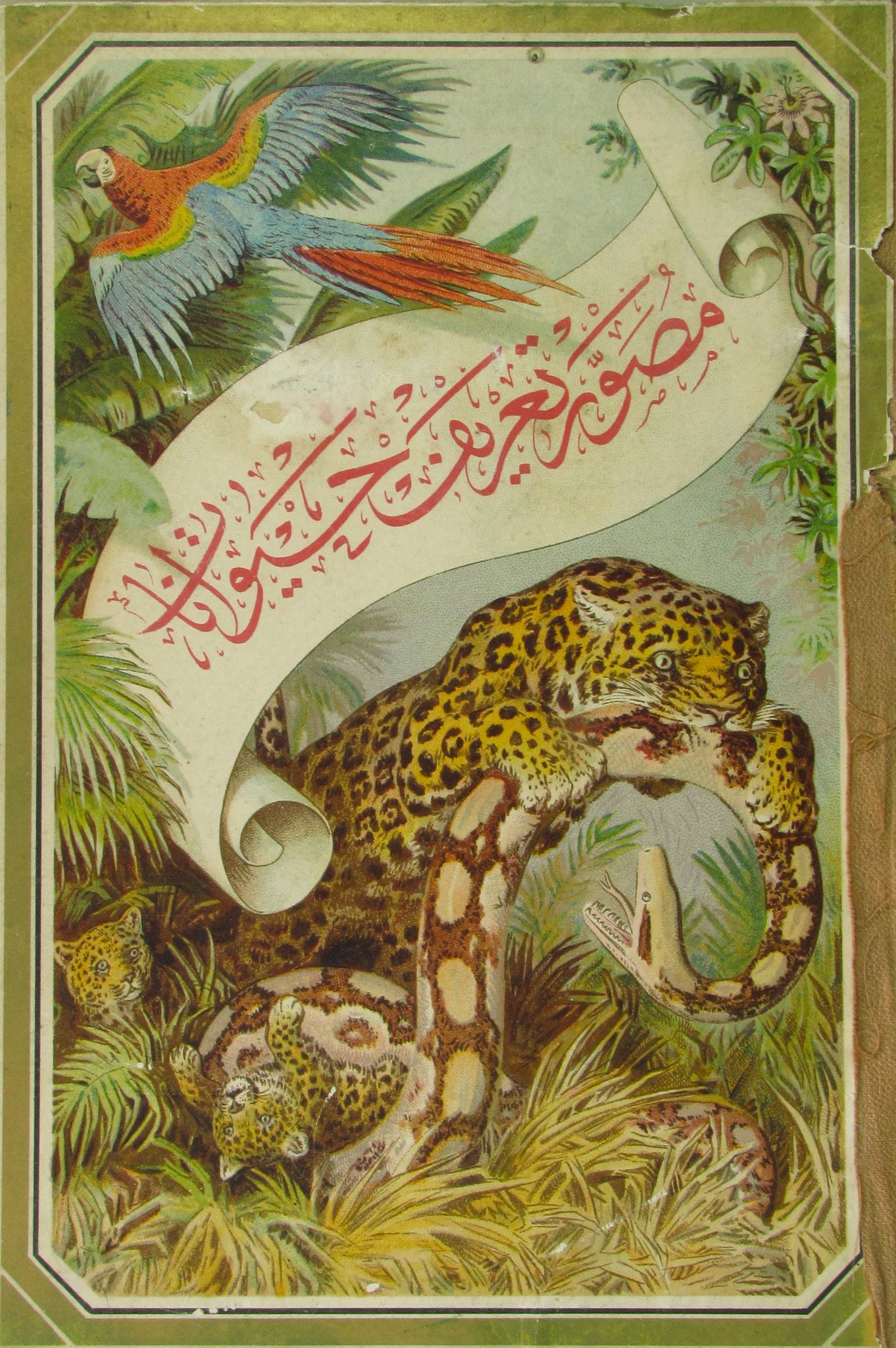
The cover of Mussaver Tarif-i Hayvanat, or Illustrated Guide to Animals. M. Emin, Istanbul: Matbaa-i Osmaniye, 1310 (1892)

A great deal of fascinating work has been done on the political implications of Social Darwinism – the misguided but extremely popular 19th century effort to apply Darwin’s theory of natural selection to human society. Historians have highlighted the role of this ideology in justifying everything from imperialism to extreme capitalism to eugenics. Today, this Ottoman Bestiary seems as good a pretext as any to discuss how social Darwinism contributed to the outbreak of the First World War….


Posted in Ottoman Empire | Leave a comment

“The Act of Killing” Documentary

This article discusses the documentary “The Act of Killing,” which was nominated for an Academy Award at this year’s Oscars.  It covers the mass killing of Communists in Indonesia in the 1960s:

It’s Our Act of Killing, Too

Act of Killing

Viewers in Jakarta watch the The Act of Killing, a film that challenges widely held views about the massacre of Indonesian communists in the 1960s. (AP Photo/Tatan Syuflana)

In The Act of Killing, one of the nominees for an Academy Award for best documentary, a group of elderly Indonesian men re-enact their role in the killing of alleged Communists following a purported coup attempt in late 1965. Viewers are rightfully repelled by how little many Indonesians today seem to know or care about the killings, and how those who participated in them not only show no remorse for their actions but are celebrated as national heroes.

“No one cared, as long as they were Communists, that they were being butchered,” recalled one observer, whose nonchalance in the face of mass murder should give us pause. This was no Indonesian, however, but rather a State Department official describing the enthusiastic support of Lyndon Johnson’s administration for the efforts of the Indonesian army and local militias to exterminate the Indonesian Communist Party (PKI), after years of mounting conflict over the direction of the country’s domestic and foreign policy.

The United States was no mere observer in these events. After supporting Indonesia’s independence from the Netherlands in 1949, US officials grew concerned over the growing popularity of the PKI and the increasing radicalism of the mercurial President Sukarno. In the aftermath of a disastrous US-backed regional rebellion in the late 1950s, Sukarno abandoned parliamentary democracy, and the army and PKI emerged as the dominant political forces in a highly polarized Indonesia….(more in link).

Posted in FSEM: History of Genocide, Indonesia | Leave a comment

Ottoman Campaign Tents

Full Article Link

Friday, February 14, 2014

Triumphal Tents


Ottoman Tents, European Trophies, and Remembering the Battle for Vienna


guest contribution by Ashley Dimmig, University of Michigan


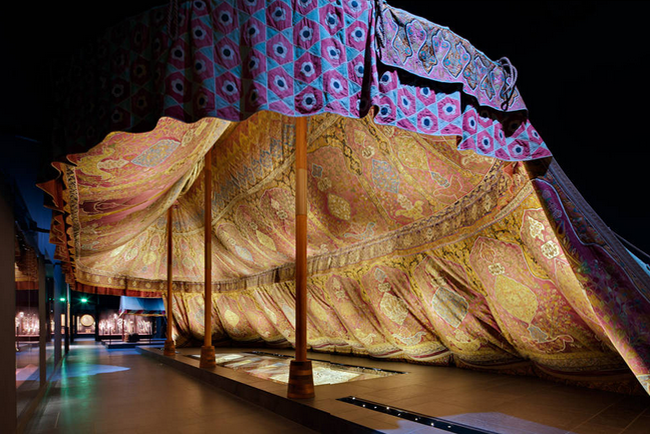
[1] Three-poled Ottoman tent, ca. 17th-century, Tent gallery, Türckische Cammer, Staatliche Kunstsammlungen Dresden (David Brandt, SKM).


On the thirteenth of September 1683, Jan III Sobieski, King of Poland, sat in the tent of the recently vanquished Ottoman Grand Vizier outside the city of Vienna, writing a letter to his wife to tell her of his victory in battle. He marveled at the scale and magnificence of the tents in the Ottoman camp, describing them being “‘as large as Warsaw or Lviv within the walls’” (Atasoy 240-41, Żygulski 165). [i.e., Figure 1] By Sobieski’s count, many tents were seized in the aftermath of the battle for Vienna—perhaps as many as a hundred thousand—although this estimate is most likely generous. Subsequently, the spoils of war, chief among them the magnificent seventeenth-century Ottoman imperial tents, were dispersed among the allied victors, in particular Poland, Germany, and Austria.

See More

Posted in Ottoman, Ottoman Empire | Leave a comment

Domain of One’s Own Workshop, Feb. 25

I think you should all attend this:

HAVE YOUR OWN DOMAIN? WANT ONE IF YOU DON’T?

Having your own Domain is a critical part of securing and developing your digital identity. But what exactly can you do with a Domain for your courses and job prospects? How does this platform allow you to feature your work and skills to a broader audience? To answer these questions and learn more about using your Domain effectively, be sure to attend the following workshop on February 25, 5-6:30pm. Martha Burtis, Special Projects Coordinator in the Division of Teaching and Learning Technologies, will lead this workshop on getting the most from your Domain from HIST 297/298/299 to life after college.

To register for this event (and obtain your own Domain if you don’t have one before the workshop), go to: http://bit.ly/doooworkshop

Tuesday, February 25, 5–6:30pm | Monroe TBA

Sponsored by the Department of History and American Studies

Questions? E-mail Prof. Harris at sharris@umw.edu

Posted in Uncategorized | Leave a comment